BRRRR Method
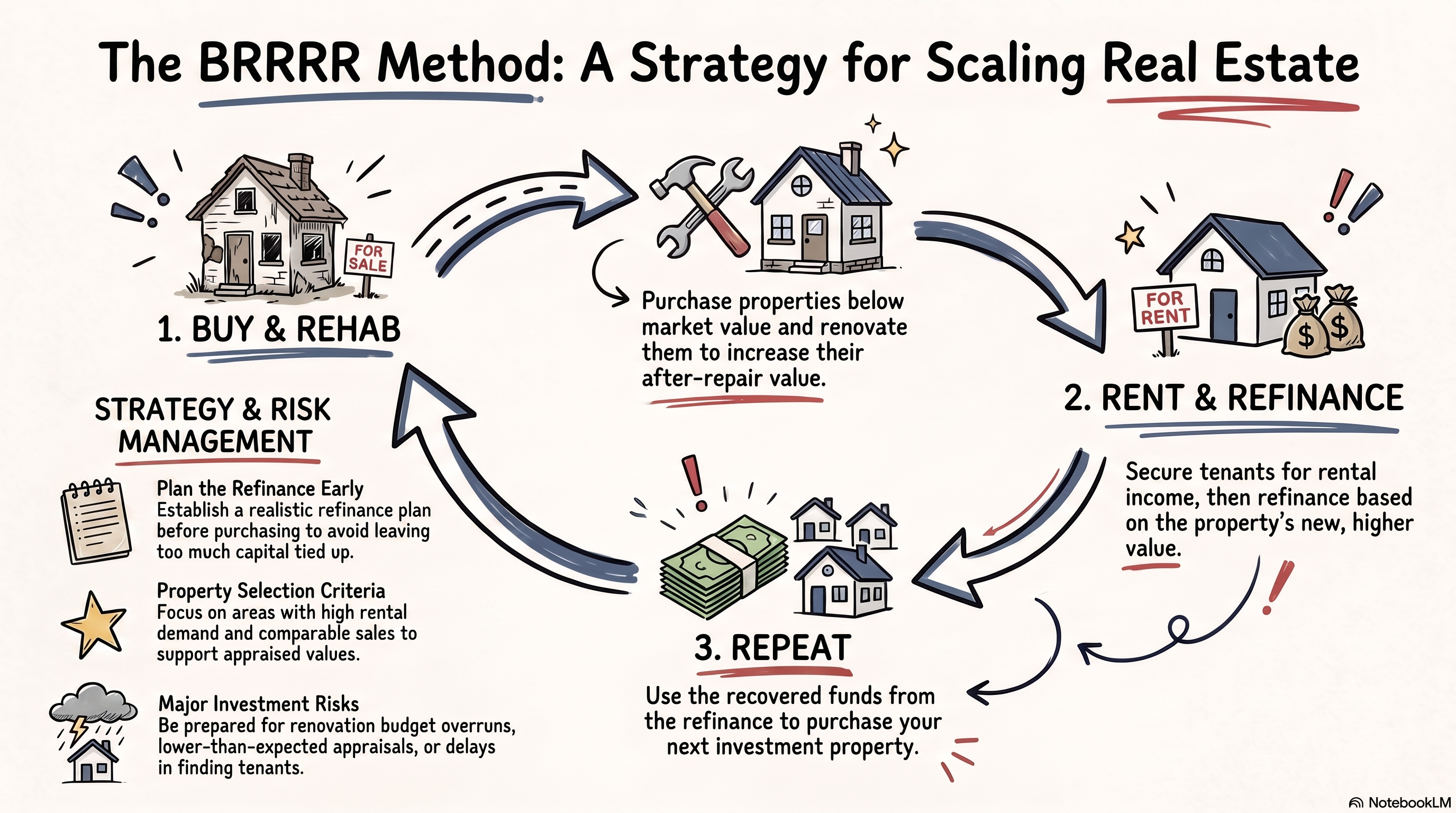
Investing in real estate can be a lucrative venture, and one popular strategy is the BRRRR method. This approach involves buying, rehabbing, renting, refinancing, and repeating the process to build a portfolio of properties. Typically, investors start by finding a property that needs renovation, which can be purchased at a lower price due to its condition.
In most cases, the rehab process is the most time-consuming and costly part of the BRRRR method. Generally, investors aim to complete the renovations as quickly and efficiently as possible to minimize costs and get the property ready for rental. Once the property is rehabbed, it can be rented out to occupants, generating a steady stream of income.
After the property is rented, the next step is to refinance it, which typically involves getting a new loan based on the property's improved value. This allows investors to pull out some of the equity they have built up in the property, which can be used to fund the next investment. By repeating this process, investors can build a significant portfolio of properties over time, generating substantial income and wealth.
- Buy a property at a low price
- Rehab the property to increase its value
- Rent the property to generate income
- Refinance the property to pull out equity
- Repeat the process to build a portfolio
Frequently Asked Questions About the BRRRR Method
What is the BRRRR method?
BRRRR stands for Buy, Rehab, Rent, Refinance, and Repeat. Investors purchase a property, improve it, rent it out, refinance based on its updated value, and use the available funds toward another investment property.
What types of properties work best for the BRRRR method?
Properties purchased below market value that have strong renovation potential typically work best. The property should also be located in an area with sufficient rental demand and comparable sales to support the expected after-repair value.
How do investors finance the initial purchase and renovations?
Investors may use cash, hard-money financing, private financing, renovation loans, or other short-term investment-property financing. The best option depends on the property, the renovation scope, and the investor’s financial profile.
How soon can the property be refinanced?
The refinancing timeline depends on the lender’s seasoning requirements, the completion of renovations, the property’s occupancy status, and the loan program being used. Investors should understand the refinance requirements before purchasing the property.
Can an investor recover all of the money they originally invested?
Possibly, but it is not guaranteed. The amount available through refinancing depends on the completed appraised value, the lender’s maximum loan-to-value ratio, closing costs, and the investor’s total purchase and renovation expenses.
What are the biggest risks of using the BRRRR method?
Common risks include renovation costs exceeding the budget, a lower-than-expected appraisal, delays in finding a tenant, insufficient rental income, and being unable to qualify for the planned refinance.
Why is the refinance strategy important before purchasing?
The refinance is what allows the investor to potentially recover and reuse part of their original capital. Without a realistic refinance plan, the investor could end up leaving significantly more money in the property than expected.
Share
BRRRR Method