Short Term Rental
Why Buy a Short Term Rental Property?
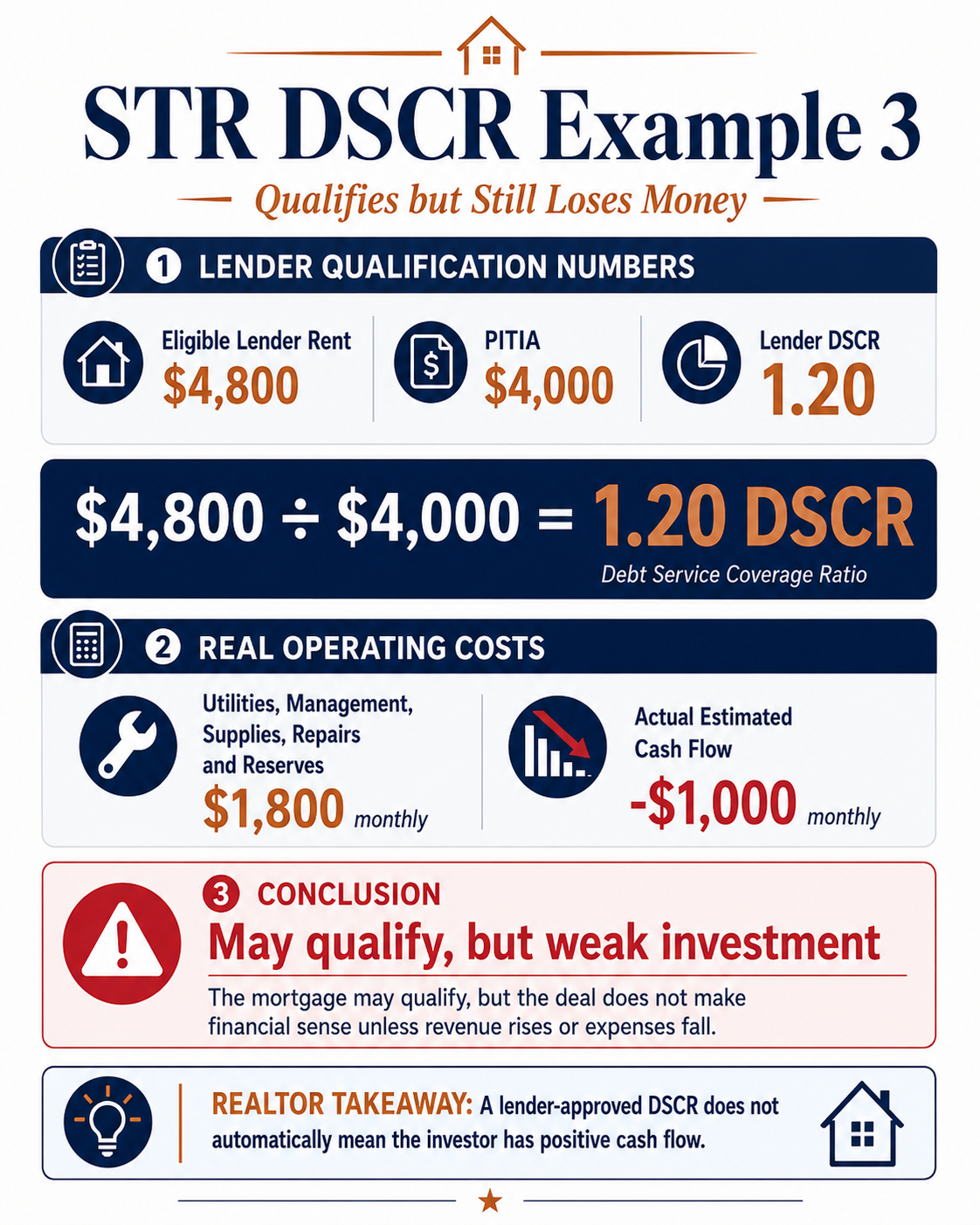
Short-term rentals can unlock income potential that traditional long-term rentals may not be able to match. Instead of collecting one fixed monthly rent, STR investors can adjust nightly pricing around weekends, holidays, local events, and peak travel seasons creating opportunities to generate more revenue from the same property. For Realtors, that means helping clients look beyond the purchase price and see how location, demand, amenities, and the right financing strategy can turn a property into an income-producing asset. The upside can be exciting, but the real opportunity starts with verifying that the rental use is legal, the income is supportable, and the numbers still work after expenses.
What Is an STR DSCR Loan?
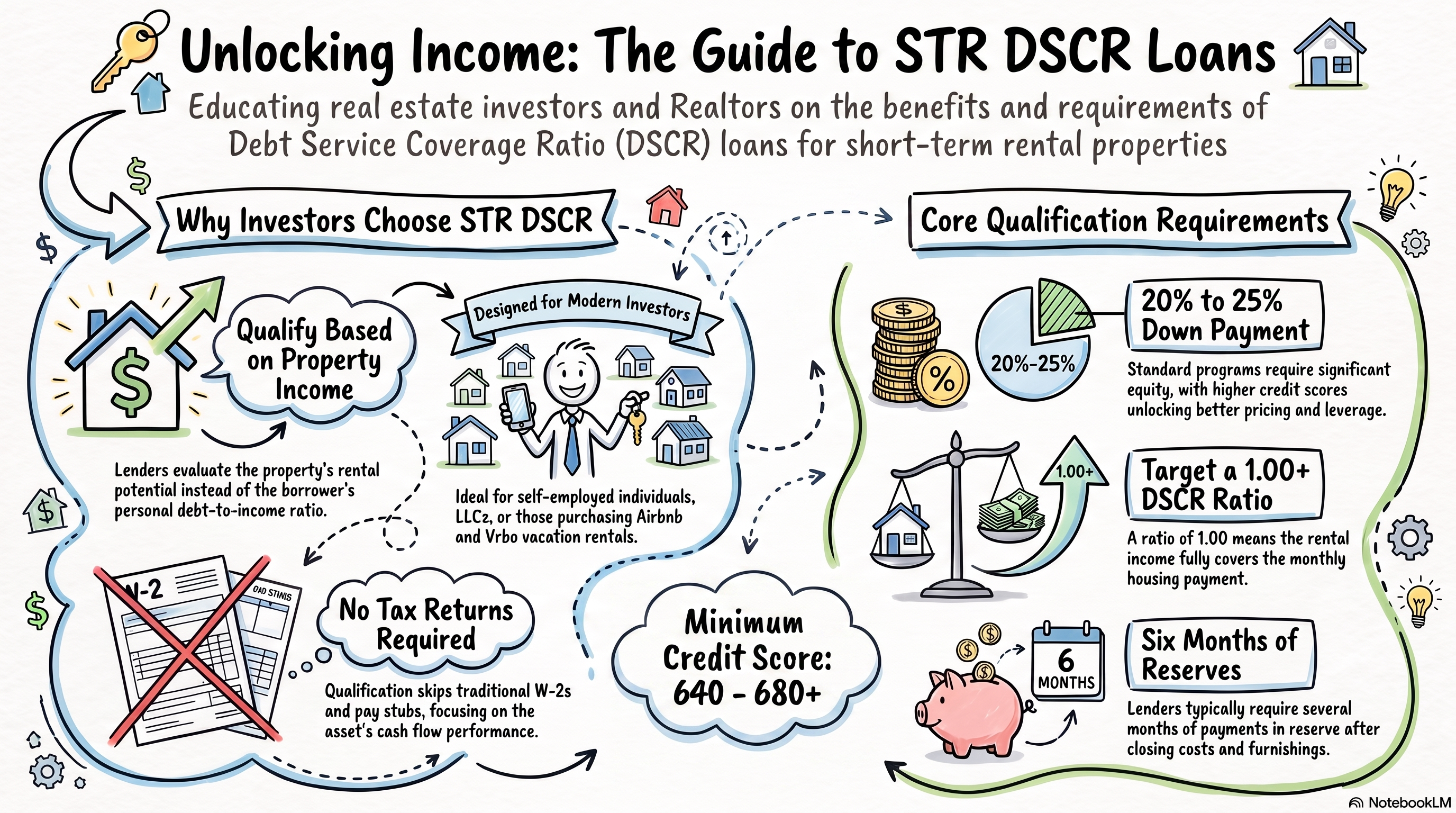
An STR DSCR loan finances a non-owner-occupied property based primarily on the property’s expected rental income rather than the buyer’s personal employment income.
Instead of qualifying through W-2s, pay stubs, tax returns, and a traditional debt-to-income ratio, the lender evaluates whether the property’s eligible rental income can reasonably support its monthly housing payment. Current DSCR programs commonly allow purchases, rate-and-term refinances, cash-out refinances, short-term rentals, long-term rentals, LLC vesting, and interest-only options.
Why investors use STR DSCR
It may be useful when the investor:
- Is self-employed
- Has substantial tax deductions
- Owns multiple financed properties
- Does not qualify conventionally because of DTI
- Wants to purchase in an LLC
- Is buying an Airbnb, Vrbo, or vacation rental
- Is refinancing after completing a BRRRR project
- Wants an interest-only option to improve cash flow
What it is not
It is not a second-home loan disguised as an investment loan. The borrower generally signs a business-purpose or non-owner-occupancy certification. Personal use, especially regular or extended personal occupancy, should be discussed with the lender before the offer is written.
STR DSCR Qualification FAQs
What is the typical down payment for an STR DSCR loan?
Many STR DSCR programs require at least 20% to 25% down. The required down payment can increase based on the borrower’s credit score, the property type, the DSCR, and whether the property has established rental history.
What credit score is usually required?
Minimum credit scores commonly start around 640 to 680, depending on the lender. Borrowers with scores of 700 or higher will generally have access to better pricing, higher leverage, and more program options.
What DSCR does the property need?
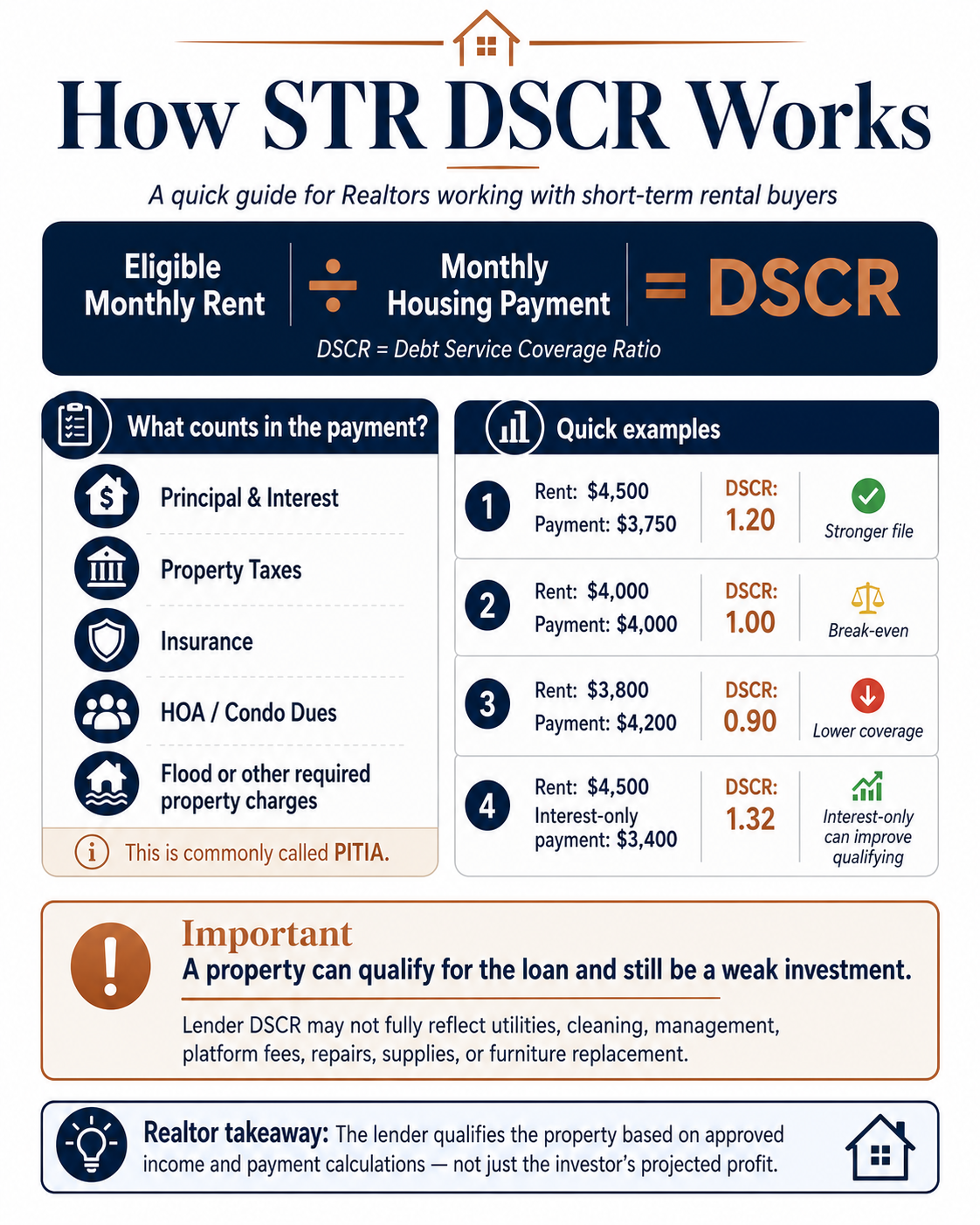
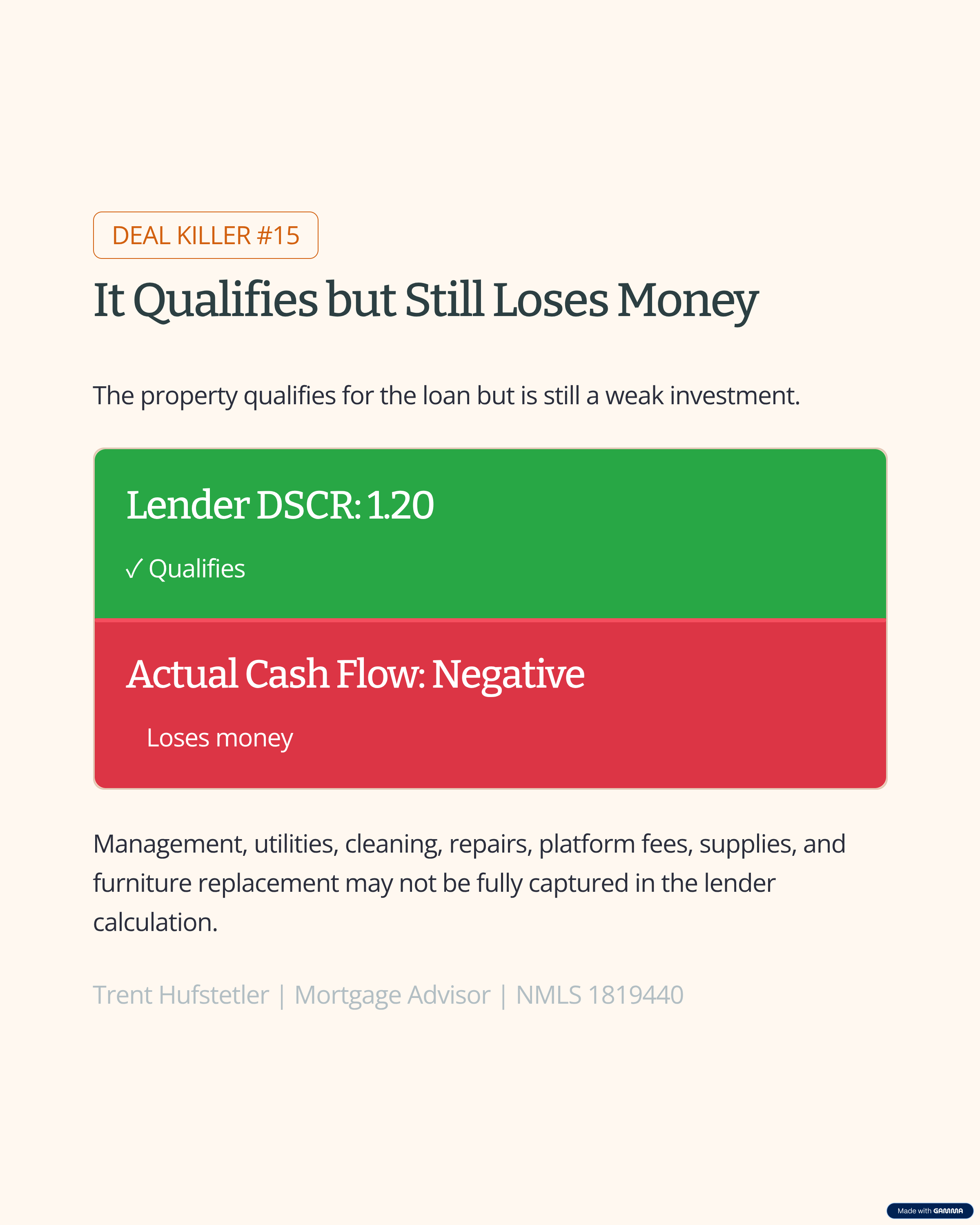
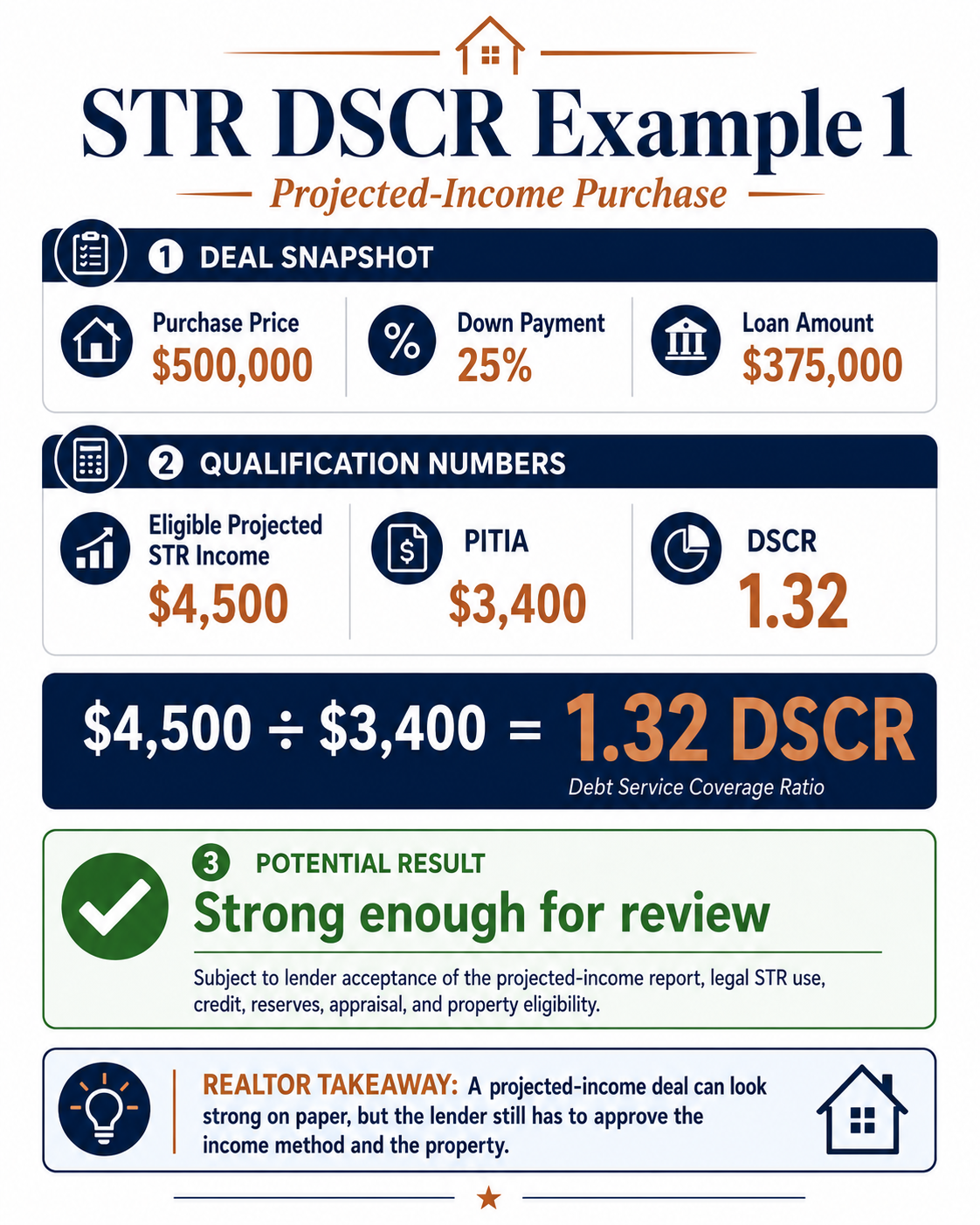
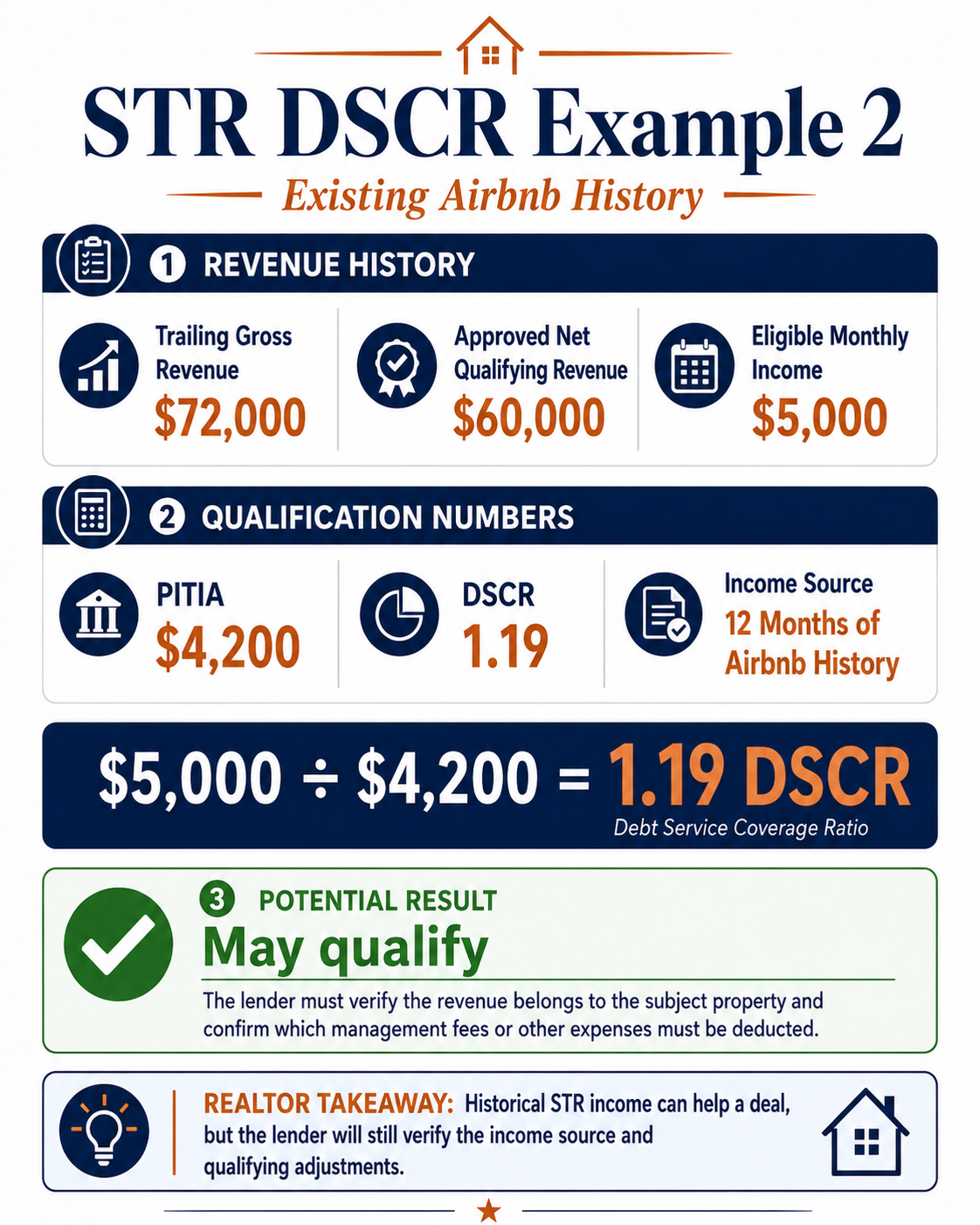
A DSCR of 1.00 means the eligible rental income equals the qualifying monthly property payment. Many lenders prefer a DSCR of 1.00 or higher, while a DSCR of 1.20 to 1.25 or higher is generally considered a stronger file.
Some lenders allow a DSCR below 1.00 or offer no-ratio programs, but those options may require a larger down payment, stronger credit, additional reserves, or higher rates and fees.
Does the buyer need to provide tax returns or pay stubs?
Usually not. STR DSCR loans are generally qualified using the property’s eligible rental income rather than the borrower’s personal employment income or debt-to-income ratio.
The lender will still review credit, assets, reserves, housing history, and the borrower’s overall ability to complete the transaction.
Can a first-time investor qualify?
Yes, some lenders allow first-time investors. However, the borrower may face lower maximum leverage, additional reserve requirements, or other restrictions.
First-time investors and first-time homebuyers are not always treated the same. Some lenders allow a first-time investor but will not approve a borrower who has never owned a primary residence.
How many months of reserves are usually required?
Reserve requirements vary, but several months of the property’s qualifying payment are commonly required. Six months of PITIA is a useful initial screening reference, especially when the borrower, property, or transaction has additional risk.
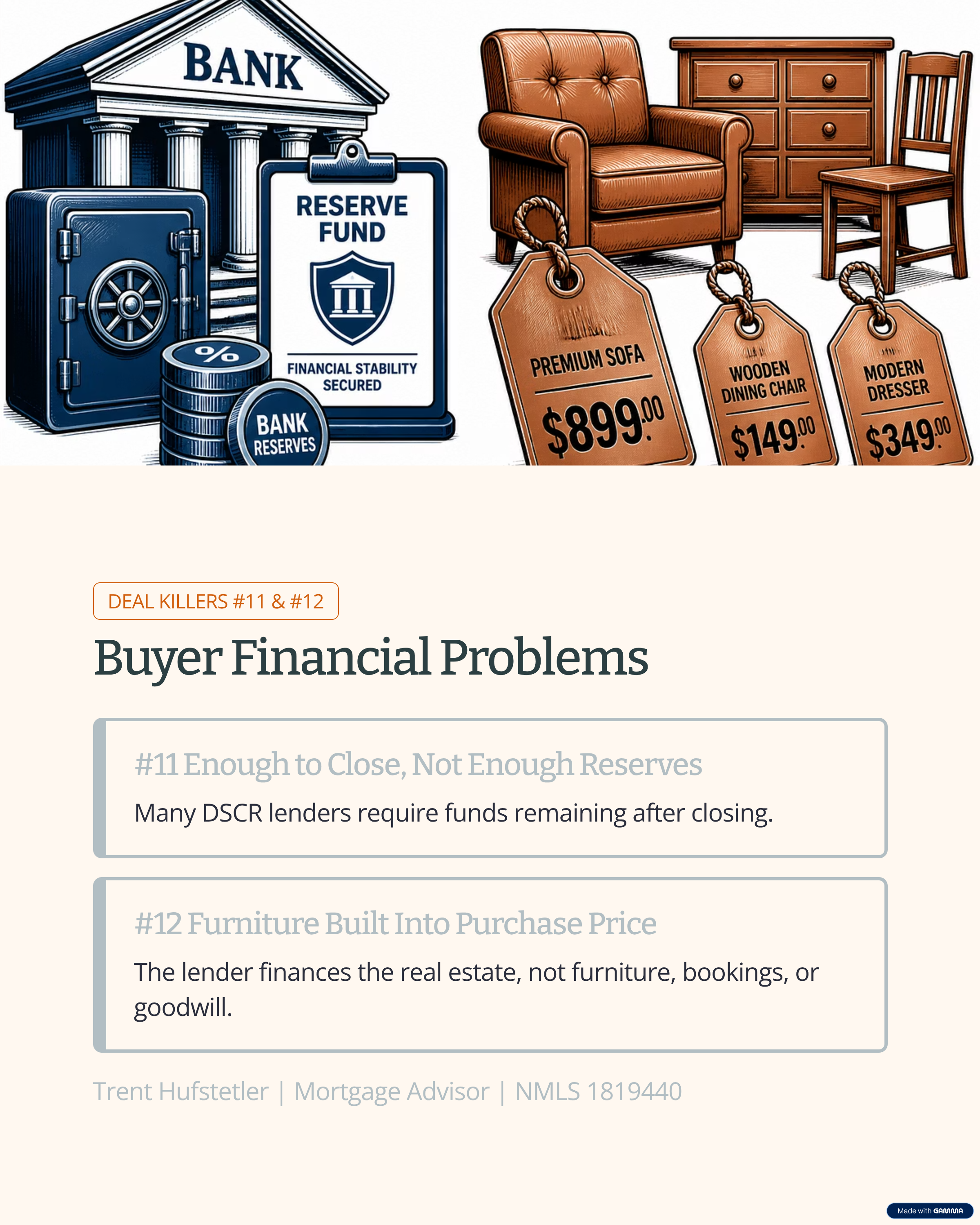
Reserves are generally funds remaining after the down payment, closing costs, and any required renovation or furnishing expenses are paid.
Can the property close in an LLC?
Many DSCR lenders allow the property to be purchased directly in an LLC or other approved business entity. The lender may require the borrower to personally guarantee the loan.
The borrower should establish the entity and confirm the correct vesting before signing the purchase contract.
Are interest-only options available?
Yes, some STR DSCR programs offer interest-only payments for an initial period. This can reduce the qualifying payment and improve the DSCR.
Interest-only financing can improve short-term cash flow, but it delays principal reduction and may result in a higher payment later.
Are prepayment penalties common?
Yes. Prepayment penalties are common on business-purpose DSCR loans, although they vary by lender, state, and loan structure.
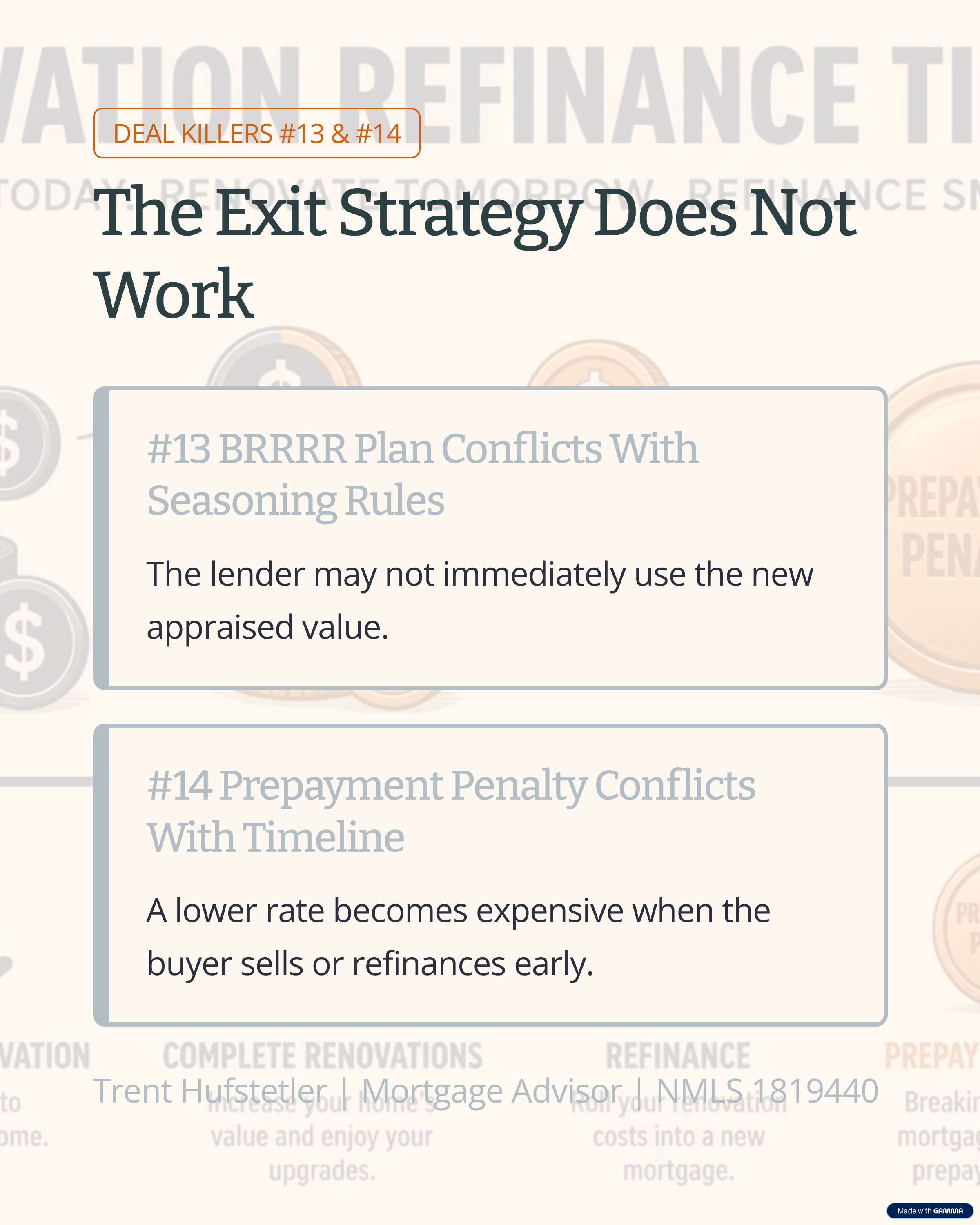
The investor’s planned hold period should be discussed before selecting the loan. A low rate may not be worthwhile if the borrower expects to sell or refinance while a large prepayment penalty is still active.
Can a property qualify with a DSCR below 1.00?
Possibly. Certain lenders permit low-DSCR or no-ratio loans. These programs often require more equity, stronger credit, increased reserves, or less favorable pricing.
A DSCR below 1.00 also means the lender-recognized rental income does not fully cover the qualifying monthly payment.
What loan terms are commonly available?
Common options include 30-year fixed-rate loans, adjustable-rate mortgages, and interest-only structures. Available terms depend on the lender, credit score, property type, leverage, and DSCR.
Are all STR DSCR guidelines the same?
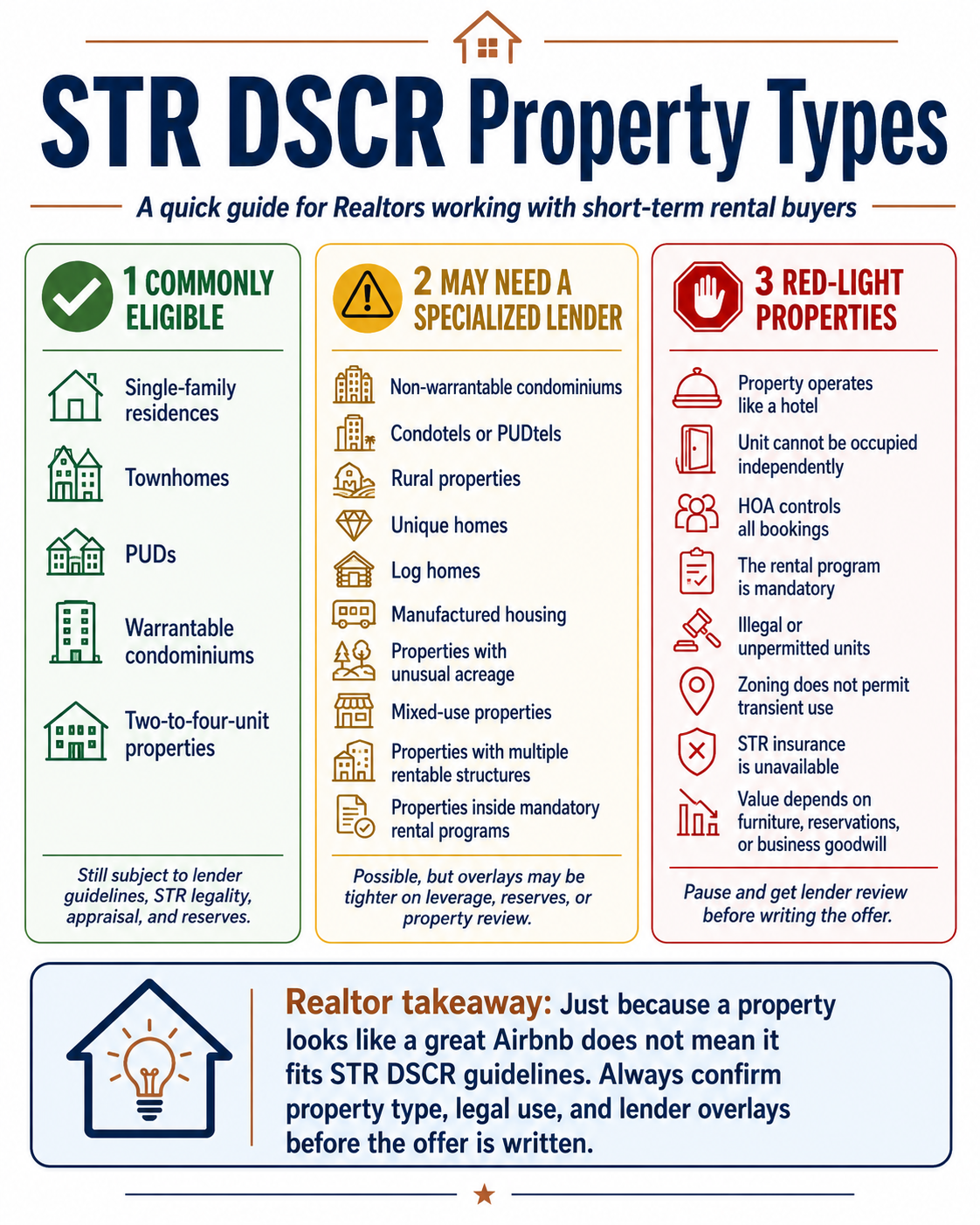
No. STR income calculations, minimum credit scores, maximum LTV, reserve requirements, seasoning rules, property eligibility, and prepayment penalties can vary substantially between lenders.
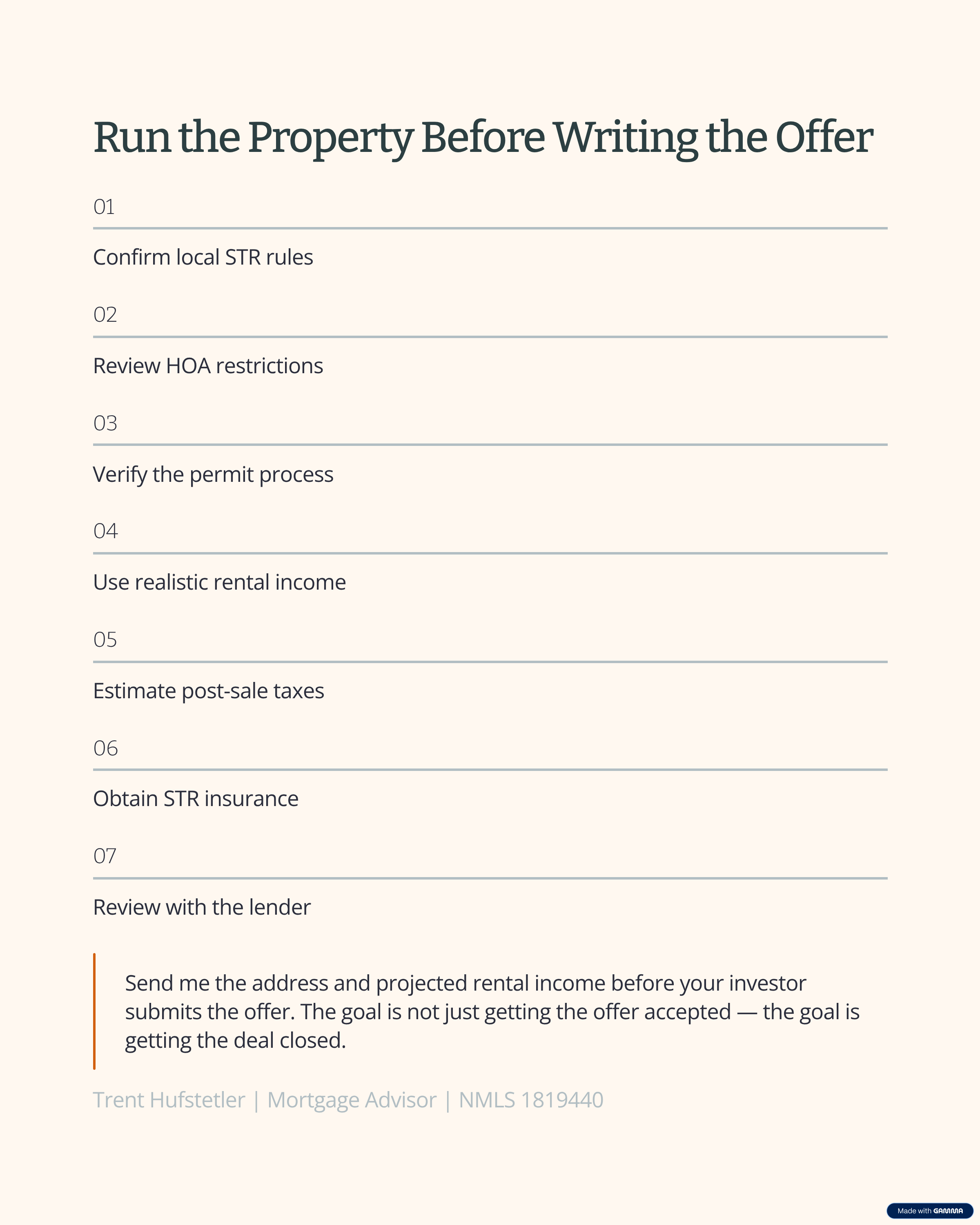
Realtors should have the property and buyer reviewed by the mortgage advisor before representing a specific down payment, rate, DSCR requirement, or approval outcome.
Photo Gallery
STR DSCR Entity Vesting FAQs
Can an STR DSCR property be purchased in an LLC?
Yes. Many DSCR lenders allow the property to be purchased and financed directly in an LLC. This is one of the reasons investors often choose DSCR financing instead of conventional financing.
The exact entity types allowed vary by lender.
What types of entities may be eligible?
Depending on the lender, acceptable entities may include:
- Single-member LLCs
- Multi-member LLCs
- S corporations
- C corporations
- Partnerships
- Certain trusts
The lender must review and approve the entity before closing.
Does the borrower still personally guarantee the loan?
Usually, yes. Even when the property is owned by an LLC, the lender commonly requires one or more individual members to personally guarantee the loan.
The loan may be considered business-purpose financing, but the lender still evaluates the guarantor’s credit, assets, mortgage history, and background.
Does the LLC need to be created before the offer is written?
It is best to establish the intended purchasing entity before the contract is signed.
The buyer name on the purchase contract should match the approved vesting whenever possible. Creating or changing the entity late in the transaction can create problems with underwriting, title, insurance, the appraisal, and closing documents.
What if the buyer signs the contract personally and later wants to close in an LLC?
Some lenders may allow the buyer to assign the contract or amend the purchaser name to an approved LLC. Others may require additional documentation or may not allow the change close to settlement.
The buyer should confirm the intended vesting with the mortgage advisor and title company before making the change.
What documents will the lender need for an LLC?
Commonly requested documents include:
- Articles of organization
- Operating agreement
- EIN confirmation
- Certificate of good standing
- Borrowing resolution
- Authorized-signer documentation
- Ownership or membership schedule
- Personal guaranty
- Foreign-entity registration, when required
Additional documents may be required for multi-member entities, corporations, partnerships, or trusts.
What is a borrowing resolution?
A borrowing resolution confirms that the entity has authorized the loan and identifies who is permitted to sign on behalf of the business.
The lender or title company may provide its own form, even when the LLC operating agreement already gives the member borrowing authority.
Does the LLC need to be registered in the state where the property is located?
Possibly. An LLC formed in a different state may need to register as a foreign entity in the property’s state.
This requirement can depend on the lender, title company, state law, and the nature of the entity’s business activities.
Can a newly created LLC qualify?
Often, yes. Many DSCR lenders allow newly formed entities because qualification is generally based on the property, guarantor, and transaction rather than the LLC’s operating history.
The lender will still require completed organizational documents and verification that the entity is active and in good standing.
Can a first-time investor use an LLC?
Possibly. Whether a first-time investor qualifies depends on the lender’s guidelines.
Some lenders allow inexperienced investors to close in an LLC, while others may reduce the maximum LTV, require additional reserves, or require previous property ownership.
Does the LLC need its own bank account?
Not always, but it can make the transaction cleaner.
The lender may allow funds to close from the borrower’s personal account, the LLC’s account, or another approved source. The funds must be properly documented, and transfers between personal and business accounts may require additional statements.
Can the borrower use a business bank account for the down payment?
Often, yes, provided the borrower has authority to use the funds and the withdrawal will not negatively affect the business.
The lender may request business bank statements, entity documents, proof of ownership, and confirmation that using the funds will not harm the company’s operations.
Can the property be transferred into an LLC after closing?
That depends on how the loan was originally structured and what the loan documents permit.
Transferring title after closing without lender approval could create insurance, title, servicing, or due-on-sale concerns. The borrower should speak with the lender, title company, insurance provider, and legal or tax advisor before transferring ownership.
Will the insurance policy need to name the LLC?
Yes, when the LLC owns the property, the insurance policy generally needs to reflect the correct legal owner and mortgagee information.
The insurance company must also confirm that the policy permits short-term rental use.
Can the LLC name be changed during the transaction?
It may be possible, but it can create delays.
A name change may require revised entity documents, contract amendments, appraisal updates, insurance changes, title revisions, and new lender approval. It is better to finalize the entity before loan submission.
Does entity vesting change the appraisal?
The property valuation itself should not change simply because an LLC is purchasing the property. However, the appraisal, purchase contract, title commitment, insurance, and loan documents should all identify the correct borrower or intended owner when required.
Does the realtor need to decide how the buyer should vest?
No. Realtors should not provide legal or tax advice about whether a buyer should purchase personally or through an LLC.
The realtor should ask the buyer how they intend to take title and make sure the mortgage advisor, title company, insurance provider, and appropriate legal or tax professionals are involved early.
What is the most important realtor takeaway?
Confirm the buyer’s intended vesting before the offer is written.
A property may qualify for STR DSCR financing, but an incomplete LLC, incorrect purchaser name, missing operating agreement, unauthorized signer, or last-minute vesting change can delay or derail the closing.
Share
Short Term Rental